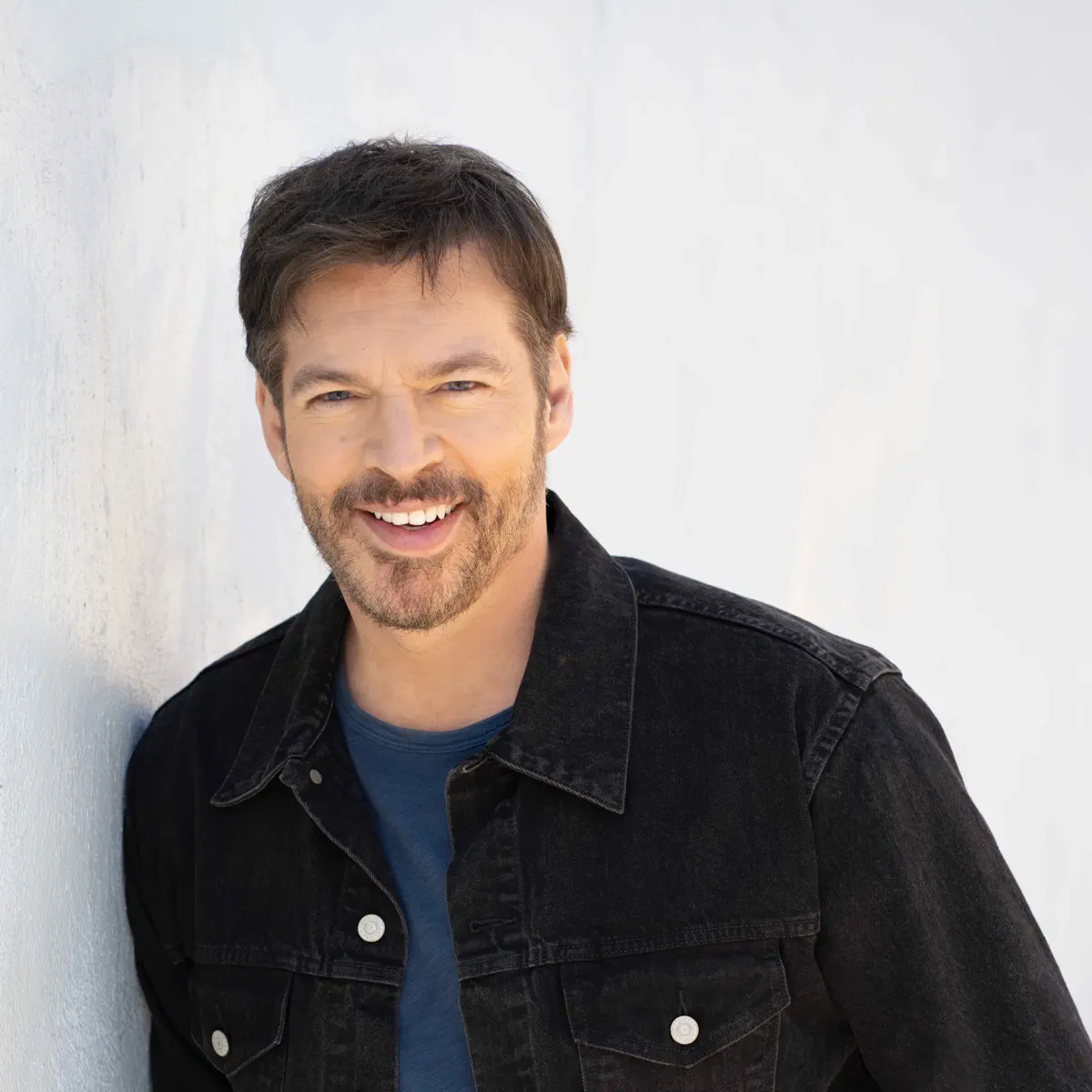
As a classically trained piano prodigy growing up in New Orleans, Harry Connick, Jr. embraced his mother’s dream that one day he would play at Carnegie Hall. He was 10 when she was diagnosed with cancer. “I actually called the Hall from New Orleans and asked them if I could play there,” he says. “They said, ‘Well, this is the box office. Um, it doesn’t work like that.’ I told my mom, ‘You know, I tried.’” She died three years later, and that’s when Connick vowed that unless it was for a special occasion, he would never set foot in New York’s most prestigious music venue.
That occasion arrived in May 2026 with the world premiere of this work, BABE: ELABORATIO—Connick’s orchestral tribute to his mother, Anita-Francis Livingston Connick, or “Babe” as she was affectionately known, performed on what would have been her 100th birthday. Marking a step away from the jazz for which he’s best known, the piece is written in three movements for large-scale orchestra, big band, and solo piano. Each section corresponds to a period in her life: her childhood in New York; her journey to Istanbul and then to Nouaceur, Morocco, where she met and fell in love with her husband; and her later years in New Orleans where she became a trailblazing judge and a mother. “I chose to call it ELABORATIO because she would have found that absurd; she would have said, ‘Why don’t you just call it “Music for My Mom” or something?’”
With its shades of George Gershwin and a theme that spells out the letters B-A-B-E, the opening movement, “New York,” is immediately redolent of jazz-age New York, but it’s inspired less by Rhapsody in Blue than by his mother’s childhood memories, says Connick. “Like the time when she was three and a policeman pulled my grandfather over because he said, ‘You’re not allowed to drive livestock through Times Square.’ But it was my mom with her blonde hair and all her siblings in the back—the cop thought they were sheep.” So how does Connick translate these snapshots into sound? “You think, ‘If I were watching that in a film, what would the soundtrack sound like?’” he explains. “It wasn’t trying to sound like New York. It just came out like it.”
Ideas came quickly to Connick—it took him only six weeks to write and arrange the entire work. Just as his mother’s love of three-movement concerto form suggested its overall structure, so her passion for Beethoven inspired the second movement, where the musical language is highly Romantic. The movement begins with a lone clarinet solo, against percussion, evoking the image of his mother arriving alone in Istanbul after leaving New York. “When the strings come in and the brass after that, it’s like, ‘What is happening right now?’—that sense of, ‘Oh my gosh, where am I?’” The piano writing is also richly chromatic. “I don’t let the keys bind me,” he explains. “Plus, there’s this B-A-B-E thing, which is absolutely everywhere: The notes are buried in the music.”
The last movement, “New Orleans,” captures Babe’s arrival in New Orleans where, together with Harry Connick, Sr., she opened a record store from which they raised enough money to put themselves through law school. Here, the opening fluttering piano figuration represents the propellers of the plane, before we are plunged into the vibrant chaos of Louisiana life. A poignant moment of reflection arrives with solo piano chords, evoking the birth of his sister. “She was born on July 7, so there’s seven chords and then there’s this rhythmic pattern, which is when I was born. From then on, it kind of spun out of control.
“Sometimes, I wish I could go back and rewrite this movement,” he adds. “Like, it’s a little bit frenetic and all over the place, but that’s kind of what my life was because my mother was dying and I had no control over that. I was in a tailspin at that point.”
Connick says that after all the years of waiting, his Carnegie debut was one of the “heaviest things I’ve ever lived through.” Does he worry about making such intimate reflections public? “It would have mattered earlier in my life when I didn’t really talk about my mom that much just because it hurt too much. But as I got older, over the decades I became more comfortable with talking about her. I’m not really interested if somebody wants to critique it.” He pauses: “Like, I kept asking myself, ‘Is this the best you can do? Are you doing the best work you can do?’ And it really is. I wanted it to be a very personal tribute to my mom that only I could have written from my perspective.”